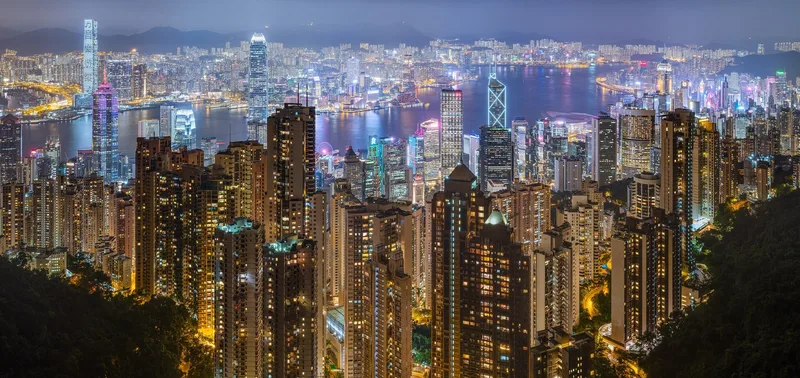
Why go at night
Victoria Harbour is one of the clearest ways to understand Hong Kong after dark. The view brings together dense towers, moving ferries, water reflections, hillside silhouettes, and a skyline that changes with weather and time. For first-time visitors, it is a strong evening route because the main viewpoints are easy to combine without a complicated plan.
Start from Tsim Sha Tsui waterfront
The most straightforward first stop is the Tsim Sha Tsui waterfront on the Kowloon side. From here, Hong Kong Island fills the opposite bank and the harbour gives the skyline room to breathe. Walk slowly along the promenade, choose one wide angle for the full skyline, then look for smaller details such as ferry lights, reflections, and people along the railing.
Skyline and light-show notes
A Symphony of Lights can add movement to the harbour, but it should not be the only reason to visit. Weather, haze, wind, special events, and local notices can affect how strong the show feels on a given evening. Treat the light show as a bonus, and make the route work even if the best photos come from blue hour or from normal building lights after full darkness.
Ferry and harbour-view options
If you want the skyline to feel less static, add a short harbour crossing or watch ferries from the pier area. Moving lights on the water help photos look more layered, and the skyline reads differently when seen from low on the harbour. Keep expectations practical: boat movement can blur night photos, so take several frames and keep the camera steady.
Best photo spots
Use three kinds of angles. From Tsim Sha Tsui, shoot across the water toward Central and Wan Chai. From higher viewpoints such as the Peak or Sky100, use the harbour shape and dense tower grid as the main subject. From the pier or promenade edge, include water reflections in the foreground instead of filling the whole frame with buildings.
Best time to go
Arrive before full darkness if photography matters. Blue hour keeps color in the sky and separates the towers from the background, while full darkness gives stronger reflections and a brighter skyline. Clear evenings are easiest, but low cloud can also look dramatic when the upper floors of the towers catch the light.
How it compares
Hong Kong feels denser and more vertical than many mainland waterfront skylines. If you want a classic riverfront comparison after this, the Shanghai Bund and Lujiazui skyline guide is the closest mainland match. If you prefer seeing towers from the water, compare it with the Guangzhou Pearl River night cruise guide.
Practical tips
Check weather and visibility before building the evening around a skyline view. Bring a small camera or phone that is easy to handle in crowds, avoid blocking the waterfront railing for long periods, and keep an eye on last transport connections if you move between Kowloon, Hong Kong Island, and higher viewpoints.
Planning references
For current visitor context, see Discover Hong Kong information on Victoria Harbour, Discover Hong Kong information on A Symphony of Lights, and the Hong Kong Tourism Commission details for A Symphony of Lights.
Photo: Benh LIEU SONG / Wikimedia Commons / CC BY-SA 4.0. Photo: Wilfredor / Wikimedia Commons / CC0. Photo: Wilfredor / Wikimedia Commons / CC0. Photo: Diego Delso / Wikimedia Commons / CC BY-SA 3.0. Photo: Diego Delso / Wikimedia Commons / CC BY-SA 3.0. Photo: Diego Delso / Wikimedia Commons / CC BY-SA 3.0. Photo: Pexels / Pexels License. Photo: Pexels / Pexels License.